Blending Tradition & Technology to Produce Wines of Distinction

HISTORY

Allinda winery is a small winery, established in 1990, in the foothills of The Great Dividing Range at the northern end of the Yarra Valley by Al and Linda Fencaros.  Al originally graduated from the University of Melbourne as an applied chemist.  After a short period in the paint industry, Al decided the odours of paint, whilst often intoxicating, were rarely pleasurable. Al then went on to graduate as a winemaker from Charles Sturt University and honed his practical winemaking skills with two prestigious local wineries.

Allinda is a modern, well equipped winery producing 10,000 cases of wine per year which is divided between the Allinda brand, made exclusively from estate grown grapes, and contract winemaking for other Victorian brands.

VITICULTURE

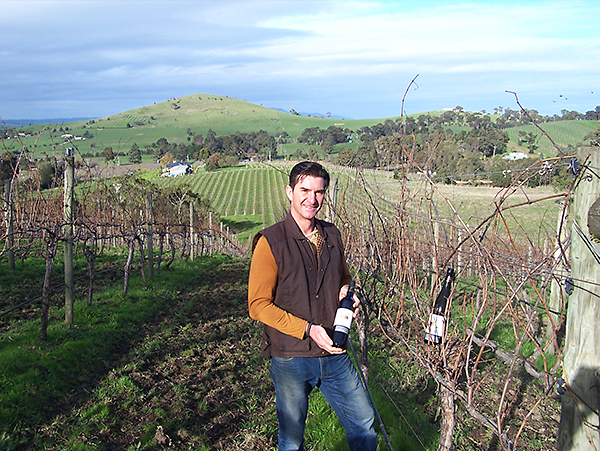
Great wines start in the vineyard. At Allinda, we have a very small vineyard of only 8 acres, so it makes sense to do what ever it takes to grow excellent fruit. This started with using clones sourced from local vineyards that had a proven record for producing quality fruit in this climate.

The importance of crop levels, vigour control and fruit exposure to optimum fruit quality have been well proven over the last ten years. At Allinda the Scott Henry trellis system is used. Whilst this system is one of the most expensive to set up and to maintain, when used correctly it does, without doubt, optimise fruit quality.


WINEMAKING 

Much can be said about the art and science of winemaking. Ultimately, to produce wines of distinction, it is important to use our modern understanding of winemaking science to assure product quality. But even more importantly, to marry this with some of the traditional techniques that have been proven to go beyond science in defining the character of a wine. At Allinda we use the oft-neglected sense of touch as a

focal point for our winemaking style. We believe that wines should not only stimulate our sense of sight, smell and taste, but also our tactile sense – the wine should feel pleasurable on the palate.

Achieving tactile excellence requires achieving a delicate balance between acidity and “sweet” sensations such as those contributed by residual sugar levels, alcohol and the glycerol produced during fermentation. It also requires achieving high levels of amino acids through techniques such as extended contact with yeast lees. Perhaps most importantly of all, it requires much attention to phenolic composition through selective extraction of soft, drying tannins and minimisation of hard, bitter tannins. At Allinda we are constantly working at optimising our winemaking techniques to achieve the highest standards of tactile quality in our wines.


QUALITY ASSURANCE

In any other industry, a statistical major defect rate of 6% would not be tolerated. So why is this level of cork (TCA) taint tolerated in premium wines? At Allinda, in a bid to ensure consistent product quality, we adopted the use of synthetic closures for our Riesling in 1996 with excellent results. As of 2002, with the huge acceptance of twist top (Stelvin) closures in Australia, New Zealand and the UK, and the proven performance of these closures over 30 years, all of our Riesling and Chardonnay are now sealed in this way. In 1998 Allinda received the first commercial batch of corks sterilised using microwave technology to achieve deep penetration of sanitation. These corks have been used for our 1996, 1997, 1998 and 1999 Cabernets. Whilst results with these corks were a moderate improvement over chemically sanitised corks, the rate of TCA and random oxidation was still unacceptably high. Following promising results in trials conducted by the Australian Wine Research Institute we have moved to Twin-top closures for our 2000 and 2001 Cabernets. These are corks with similar construction to those used for sparkling wine. They have a dense core made of agglomerate (ground and glued cork) which is very dense and reduces ingress of air (originally designed to reduce loss of fizz from bubblies) to reduce random oxidation. Each end of the cork has a disk of good quality solid cork. Being thin, better quality cork can be used, with fewer crevices for organisms to harbour and lead to TCA. We believe that the place for tradition and romance is in the making of the wine. When it comes to packaging though, modern good manufacturing practice is important in retaining all the subtleties that have gone into making it.

DISTRIBUTORS:

Yarra Valley & Dandenong Ranges: Tony Inglese - 0408 105 418

Melbourne: William Chong, Bacchus Wines – 0419 225 978

National: Lee Evemy, Wide World of Wine – 0410 488 692

Singapore: Cold Storage, Melvin Koh – +65 9688 0813

Philippines: Asia Wine Connection, Lester Solden - +65 0414 275 841

 
Blending Tradition and Technology
to Produce Wines of Distinction


Copyright 2005 Allinda Winery. All Rights Reserved.